


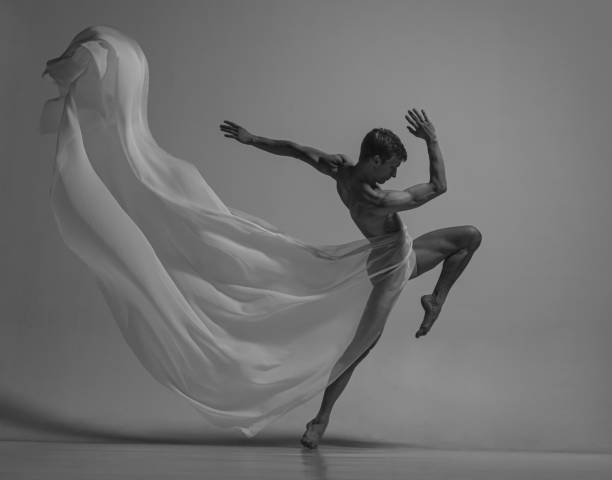
Classical ballet is as much about listening as it is about moving. Beneath every plié, pirouette, and petit allegro lies the guiding pulse of musicality — dictated by tempo, rhythm, and musical phrasing. Here’s how dancers learn to interpret music and bring choreography to life.
1. Tempo: Finding the Speed of Emotion
The tempo, also known as beats per minute (BPM), is the “heartbeat” of a piece. Tempo helps inform the dynamics and emotion of a movement phrase. An Adagio (slow) for example, invites lyrical and expressive movement such as port de bras that melt in space. An Allegro (fast) on the other hand, demands energy, clarity, and precision such as in small jumps and fast footwork.
Dancers never want to be falling behind or rushing ahead of the music – we aim to be directly ‘on’ the music. Counting to the music is a useful tool for technical accuracy particularly when rehearsing. With enough practice we gain the ability to internalise various tempos and switch off the counting when performing — trusting our ears and muscles to ride the music. Dancers report greater freedom and expression once they stop overthinking the count. Whether the music builds up or slows down, the body can follow along with ease.
2. Rhythm & Syncopation: Accent Where It Counts
Rhythm gives choreographers and dancers a palette: every accent, rest, and off-beat creates shape. Learning rhythmic patterns often begins with clapping exercises or tracking the music on foot. That helps dancers truly feel the downbeat and offbeat, instead of just counting.
Within a 4 count phrase for instance, we can drastically change the way we perform a simple tendu by deciding on where we place the accent. We could brush the foot out over 2 counts and brush the foot back evenly for the next 2 counts, creating a steady rhythm. Or we could shoot the tendu out on count one, and brush the foot in slowly over the next three counts to create a little more indulgence and drama.
A syncopated rhythm can add playful character – think Kitri in Don Quixote. A deviation from a regular expected rhythmic pattern can create a sense of rhythmic tension and interest, and when mirrored with the movement, can be very exciting for both the dancers and audiences.
3. Musical Phrasing and Breath
Just like language, music is divided into phrases. Recognising a 4 or 8 bar phrase helps dancers use musical breath—when to breathe their arms open in preparation for an exercise, or an intake before a big pas de chat, or a gentle exhale into a soft rond de jambe.
4-bar phrases are common building blocks in many musical styles, offering a sense of balance and satisfying melodic or harmonic closure. An 8-bar phrase is simply two 4-bar phrases linked together, allowing for extended musical thoughts that can be used to create longer sections. They often include a sense of tension and release, with the first four bars building tension and the second four resolving it.
In this way, attending to phrasing can transform movement from mechanically correct to emotionally compelling. Each step becomes a sentence, each combination a meaningful statement.
Final Takeaway: Dance with the Music, Not Just to It
Musical timing isn’t just “stick to the beat.” It’s about understanding the music’s flow—its tempo, accents, breaths, and textures—and letting your body be the music. When timing and movement align seamlessly, ballet transcends steps. It becomes poetry in motion.
Keep listening, keep feeling, and let the music move you!

 Previous