


The ballet term port de bras refers to the ‘carriage of the arms’ – a dance of the upper body that adds colours, emotion and vibrancy to the art of ballet. Well-placed and expressive port de bras are one of the most beautiful elements of classical ballet, and something that all dancers strive for.
Not unlike positions of the feet, there are positions of the arms in ballet. The passage of arms through these positions include coordination of the hands, angles of the head, tilt of the shoulders and extensive use of the back – all amalgamating to fluid upper body movement that is organic and skilful.
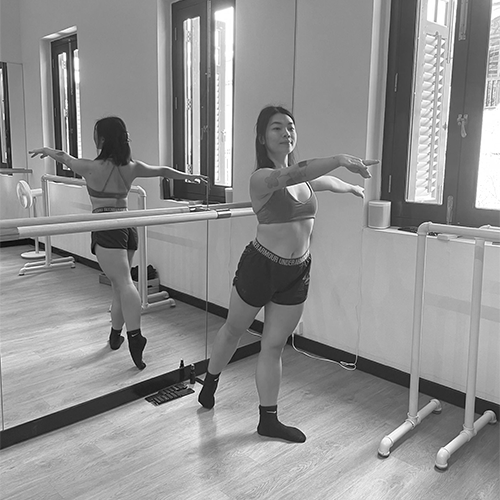
In a classical class there is typically a port de bras exercise designed to improve the quality of these movements. Here are the basic positions below, demonstrated by our lovely instructor Sammi, and read on for our tips and tricks!



Tips and Tricks
1. Posture is key. Many ‘bad habits’ (such as drooping elbows and flapping wrists) originate from a lack of muscular connection between the arms and back. This often has a postural cause. Slide your shoulders away from the ears, widen your collarbones and open your sternum as you close your ribs, feel your scapulae pulling sideways and flat for a strong, wide back.
2. Move from your middle. Imagine your arms begin low in the back. The movement, initiating in the back, continues through the shoulder, upper arm and forearm, ending with a lightly breathing wrist.
3. Coordination is important because the arms help so much in technical aspects of dancing. For instance, you can imagine a tightrope walker’s pole extending between your two elbows. With that sturdy and helpful line, you can navigate balance, direction and elevation.
4. Hands and wrists can be the most expressive. By the way a hand is held we can know if a character is a noble or a peasant, if they are giving, begging, pointing, commanding, or praising, if they are tense or relaxed, affectionate or sensual, even if they are human or ethereal beings.
5. Give it meaning. There should be reason behind every movement. It could be to compliment a step of the legs, to give energy to a balance, or to tell a story and express an emotion… The positions of the arms become the vocabulary to building eloquent speech.

 Previous