


Have you been dreaming of getting your legs to a 6 o’clock penché?
Penché is a classical ballet term meaning “leaning”, a dancer moves into an arabesque and keeps leaning forward over their supporting leg till the arabesque is well above 90 degrees. A penché basically takes a front split and turns it on its side! It is a versatile skill used across many disciplines, from classical ballet to modern jazz to contemporary techniques as well. As an amazing feat of flexibility and strength, it is not the easiest move to perform. However, once accomplished, it is a graceful addition to any dancer’s repertoire.
Most often dancers will focus on the flexibility aspect of the penché. This is of course an important component – particularly in the hamstrings of the standing leg and the hip flexors of the arabesque leg – but keep in mind that you have to work against gravity to hold the position, making it critical that your muscles are strong enough to support it too. A penché is essentially an extension of your arabesque, for tips on how to improve your arabesque, see Make Your Arabesque The Ara-best!
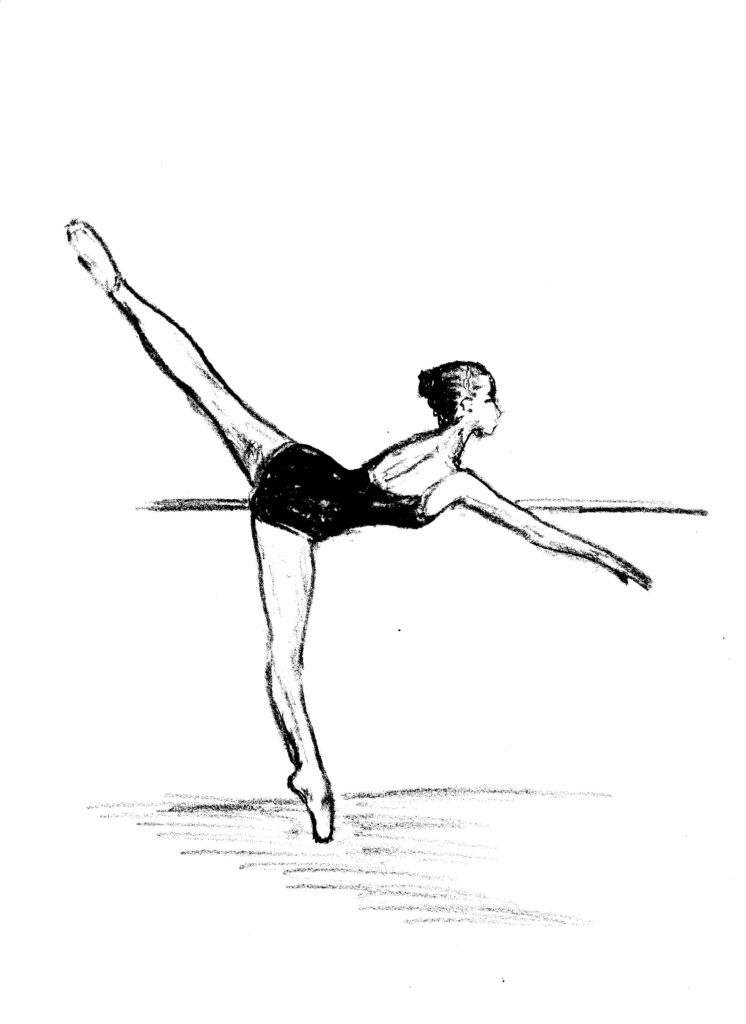
Now How to Perform an Penché?
・From your arabesque, continue reaching the back leg up towards the ceiling, maintaining turnout through both legs.
・Simultaneously – open your chest, keep a cambré (arch) through your spine as you tilt your torso forward and down. Think about lifting the back leg so high that the upper body has to move, rather than lowering the upper body for the leg to lift up.
・Your torso and arabesque leg should move in equal distance. In fact, a common image used to describe the action of the penché is a seesaw – think of the connection between the back toes and the opposite shoulder, and check that they move together (this connection also helps keep the shoulders and hips square).
・Pull up through the supporting leg to stabilise yourself. This movement requires good hamstring mobility and eccentric control as the supporting hamstrings are lengthened and contracting at the same time.
・To recover from your penché – initiate with lifting the chest. This time it’s the upper body that moves the leg rather than lowering the leg and leaving the body behind.
Whew! Penché. So simple, yet so tough.
Keep practicing and see you at the BalletBody studios!
 Previous